Mast water technology mainly focuses on providing water softening solutions to the modern household. The water that comes from the sea and mostly all the urban sources is hard and needs to be softened. That is why the water softening equipment is seriously appreciated in the urban dwellings where hard water is a serious issue.
Hard water is water with an extremely strong salt concentration that is not easy to remove through regular filtration. As seawater has a strong salt concentration, the water that is used from sea-based sources is high in salt concentration and will need to be softened.
Hard Water Issues:
Hard water is hazardous water for everyday use in many ways. The salt deposits in the pipes and will also build scales in the hair. It makes human skin dry and cleaning appliances and utensils with hard water reduce their lifespan. The reason is that the strong concentration of salt makes the water chemistry not good for everyday use.
Water Softening: The process of water softening takes the enormous amount of salt out of the waste water treatment so that it stops salt shedding throughout the use. The process is mainly ion exchange because salt is a combination of negative and positive ions. If you break the ionic bond then the salt will deposit in the softening machine and the water will come with a considerably reduced salt concentration in the water.
Resin Beads: The water is mainly pushed through resin beads that are made of polystyrene and are charged with sodium ions. The sodium is the positive charge while the beads themselves are negatively charged. The negative ions will connect with the positive charge of salt and vice versa, the salt in the water is left with resin beads and the water that comes out has a considerably lower amount of salt in it.
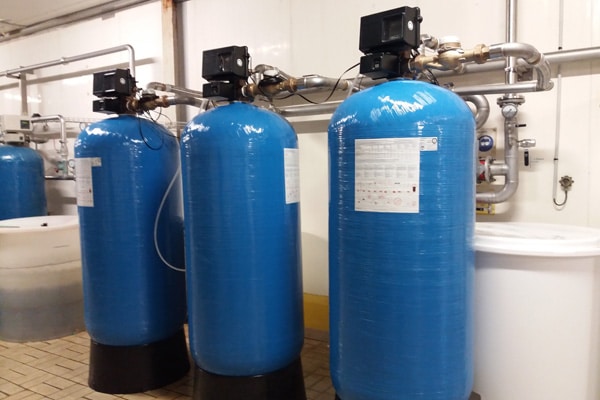
The machine looks like a long cylinder and if a person lives close to the sea, then it is a small investment for a healthier quality of life.
The machine and its apparatus are extremely easy to maintain, the beads and inexpensive and cleaning is not required in months.
But this simple device will make the water good for your skin, your hair, your food, and all other factors that are a part of everyday life. So go get one for your family this Christmas for use this type of services visit our website invwater.com
The water treatment is conducted through various processes that are commonly available online. But what are the various ways of conducting water cleaning and what aims are they trying to achieve? This blog post will outline all of these steps and explain how various treatments processes are aimed at making water more compatible with human consumption.
METAL INDICATORS:
The metal element index is one of the key devices that are used to evaluate the water’s metallic balance. This is because the metallic component like lead, arsenic, and copper should not be higher than 0.1 mg/L. The level of metallic content is usually higher in water purifiers because the water keeps circling the atmospheric ecosystem and absorbs an immense amount of metallic components present in the system. The human body cannot take metallic content that is higher than 0.6 ~ 0.8 mg/L as it destroys the liver and kidneys and causes metal poisoning.
ORGANIC INDEX:
The organic index is mainly the other half of metallic indication because the same ecosystem that pushes an exuberant amount of metallic content into the water purification also pushes an immense amount of organic or acidic content as well. Carbon-based chemicals are the most commonly occurring chemical compounds that naturally occur in the water cycle of the Earth. That leads to the accumulation of chemicals like chloroform, carbon tetrachloride, monochloromethane, monobromodichloromethane, bromoform, and dibromodichloromethane among many others. All of these organic components are highly acidic in nature and increase the pH of the water considerable. These compounds are collectively named as halogenated alkyl. Another commonly found compound is the Chlorine Dioxide because it is commonly used as a disinfectant in water that is not aimed for drinking. This leads to an abundance of chlorine in the water as well. These components are considered to be closely responsible for the increase in chances of cancer in the consumers.
BIOLOGICAL INDICATOR:
The number of biological elements such as coliform bacteria, colonies, molds, yeasts, and pathogenic bacteria is all a part of the microbial analysis. As biological elements are living organisms, they grow continuously so their levels have to be kept near to non- existent so that they cannot exceed the recommended amount. If the water is allowed to become polluted, then the water can have dangerous bacterium such as Escherichia coli that cause diarrhea in humans. More significant microbial growths include salmonella, staphylococcus aureus, streptococcus b. Salmonella and shigella that can cause enterotoxins that can be even life-threatening with intense gastrointestinal symptoms.
Nitrite Content: The nitrite content grows in water due to the presence of pesticides in agriculture that becomes a part of the ecosystem. The concentration of nitrite has to be less than 0.01 mg/L or else nitrite toxicity is a highly dangerous process in the human body.
These are the main components that are evaluated in the water purification processes so that the water becomes more stable and will become good for human consumption. Let us know your thoughts on the subject in the comments below.
Based on science development and technology innovation and dedicated to the improvement of water environment, our company is a high-tech environmental protection engineering company specialized in the research and development of water treatment equipment and technology, engineering contracting and the installation as well as the commission of the mechanical and electrical equipment. Besides, our company is the earliest and biggest high-tech environmental protection chemical enterprise dedicated in comprehensively researching and developing the environmental-friendly water treatment agents in China. The company is mainly engaged in the installation, modification as well as improvement of EPC projects regarding to water treatment companies in pakistan in the fields of electric power, industry, chemical industry, food processing, urban life and so forth.
Research and development and introduction and application of foreign top technology
CENTRAL WASTEWATER TREATMENT The objective of waste water treatment is to reduce the concentrations of specific pollutants to the level at which the discharge of the effluent will not adversely affect the environment or pose a health threat. Moreover, reduction of these constituents need only be to some required level. Although water can technically be completely purified by distillation and deionization, this is unnecessary and may actually be detrimental to the receiving water. Fish and other organisms cannot survive in deionized or distilled water.
For any given wastewater in a specific location, the degree and type of treatment are variables that require engineering decisions. Often the degree of treatment depends on the assimilative capacity of the receiving water. DO sag curves can indicate how much BOD must be removed from wastewater so that the DO of the receiving water is not depressed too far. The amount of BOD that must be removed is an effluent standard (discussed more fully in Chapter 11) and dictates in large part the type of wastewater treatment required.
Microorganisms in circulating water of power plant bring great harm to cooling water system. It not only affects the effect of heat transfer, but also would lead to corrosion of heat exchanger, in seriously would result in shutdown. Now the plant uses the bactericide to treat with the microbial fouling generally, and a variety of fungicides have been developed. However, the long-term usage of fungicide will make the bacteria appear resistance, which greatly limits the application of such measures. This paper overviewed different resistance mechanisms of Pseudomonas, sulfate-reducing bacteria, iron bacteria and slime forming bacteria in the microbial fouling to bactericide and put forward some solutions.
Benzalkonium Chloride is one of the Quaternary ammonium class of Cationic surfactants, belonging to nonoxidizing biocide. It is widely used as a disinfectant in the Hospital, Livestock and Personal Hygiene sectors
Isothiazolinones is a kind of fungicidal with properties of broad spectrum, high efficiency, low toxicity and non-oxidative, it is the ideal biocidal in industrial circulating cool water system and in wastewater treatment in oilfield, papermaking, pesticide, cutting oil, leather, detergent and cosmetics etc..
SDIC is water soluble, it has properties of high effective, instant effective, wide range and safety. SDIC has strong fungicide effect, even at dosage of 20ppm, the fungicide ratio can reach to 99%.
TH-409 is composed of cationic surfactant, penetrating agent and dispersant. TH-409 has the advantages of high efficiency, wide range, sterilization, fungicidal, sludge stripping and cleaning
An open recycling cooling framework utilizes a similar water over and over to cool procedure gear. Warmth ingested from the procedure must be disseminated to permit reuse of the water. Cooling towers, splash lakes, and evaporative condensers are utilized for this reason.
An open recycling cooling framework utilizes a similar water over and over to cool procedure gear. Warmth ingested from the procedure must be disseminated to permit reuse of the water. Cooling towers, splash lakes, and evaporative condensers are utilized for this reason.
Open recycling cooling frameworks spare a colossal measure of new water contrasted with the elective technique, once-through cooling. The amount of circulating water released to squander is enormously diminished in the open recycling technique, and substance treatment is increasingly practical. In any case, open recycling cooling frameworks are naturally subject to more treatment-related issues than once-through frameworks:
cooling by vanishing builds the broke down solids fixation in the water scale inhibitor , raising erosion and statement propensities
the moderately higher temperatures altogether increment erosion potential
the more drawn out maintenance time and hotter water scale in an open recycling framework increment the inclination for organic development
airborne gases, for example, sulfur dioxide, smelling salts or hydrogen sulfide can be assimilated from the air, causing higher consumption rates
microorganisms, supplements, and potential foulants can likewise be consumed into the water over the pinnacle
COOLING TOWERS
Cooling towers are the most well-known technique used to disseminate heat in open recycling cooling frameworks. They are intended to give close air/water contact. Warmth dismissal is basically by vanishing of part of the cooling water. Some reasonable warmth misfortune (direct cooling of the water by the air) likewise happens, yet it is just a minor segment of the all out warmth dismissal.
Sorts of Towers
Cooling towers are arranged by the sort of draft (regular or mechanical) and the course of wind stream (crossflow or counterflow). Mechanical draft towers are additionally subdivided into constrained or instigated draft towers.
Characteristic draft towers. Now and again called “hyperbolic” towers because of the unmistakable shape and capacity of their fireplaces, normal draft towers don’t require fans. They are intended to exploit the thickness contrast between the air entering the pinnacle and the hotter air inside the pinnacle. The warm, clammy air inside the pinnacle has a lower thickness, so it ascends as denser, cool air is attracted at the base of the pinnacle. The tall (up to 500 ft) fireplace is important to actuate sufficient wind stream. Common draft towers can be either counterflow or crossflow plans. The pinnacle imagined is a crossflow model. The fill is outside to the shell framing a ring around the base. In a counterflow model, the fill is inside the shell. In the two models, the vacant stack represents a large portion of the pinnacle tallness.
Mechanical Draft Towers. Mechanical draft towers use fans to move air through the pinnacle. In a constrained draft configuration, fans push air into the base of the pinnacle. Practically all constrained draft towers are counterflow plans. Actuated draft towers have a fan at the top to draw air through the pinnacle. These towers can utilize either crossflow or counterflow air flows and will in general be bigger than constrained draft towers.
Counterflow Towers. In counterflow towers, air moves upward, legitimately restricted to the descending progression of circulation water scale inhibitor . This plan gives great warmth trade in light of the fact that the coolest air contacts the coolest water. Headers and splash spouts are normally used to disperse the water in counterflow towers.
Crossflow Towers. In crossflow towers, wind currents evenly over the descending progression of water. The crossflow configuration gives a simpler way to the air, subsequently expanding the wind stream for a given fan torque. Crossflow towers ordinarily have a gravity feed framework a dissemination deck with uniformly separated metering openings to convey the water technology. Frequently, the deck is secured to hinder green growth development.
Cooling Tower Components
Fill Section. The fill segment is the most significant piece of the pinnacle. Pressing or fill of different kinds is utilized to keep the water appropriated equally and to expand the water surface zone for progressively productive dissipation. Initially, fill comprised of “sprinkle bars” made of redwood or weight treated fir. Sprinkle bars are currently accessible in plastic too. Different sorts of fill incorporate plastic sprinkle network, clay block, and film fill.
Film fill has turned out to be prominent as of late. It comprises of firmly pressed, folded, vertical sheets, which cause the water to stream down through the pinnacle in a dainty film. Film fill is normally made of plastic. Polyvinyl chloride (PVC) is usually utilized for frameworks with a greatest water temperature of 130°F or less. Chlorinated PVC (CPVC) can withstand temperatures to roughly 165°F.
Film fill gives more cooling limit in a given space than sprinkle fill. Sprinkle fill can be in part or completely supplanted with film completely fill of a current cooling tower. In view of the nearby dispersing, film fill is truly helpless to different kinds of affidavit. Calcium carbonate scaling and fouling with suspended solids has happened in certain frameworks. Procedure contaminants, for example, oil and oil, can be immediate foulants and additionally lead to substantial natural development on the fill. Any sort of affidavit can seriously decrease the cooling proficiency of the pinnacle.
Louvers. Louvers. Louvers are utilized to help direct wind current into the pinnacle and limit the measure of windage misfortune (water being sprinkled or smothered the sides of the pinnacle).
Float Eliminators. Float Eliminators. “Float” is a term used to depict beads of water entrained noticeable all around leaving the highest point of the pinnacle. Since float has a similar piece as the flowing water, it ought not be mistaken for vanishing. Float ought to be limited since it squanders water and can cause recoloring on structures and cars at some separation from the pinnacle. Float eliminators unexpectedly alter the course of wind current, giving diffusive power to isolate water from the air. Early float eliminators were made of redwood in a herringbone structure. Present day float eliminators are regularly made of plastic and come in a wide range of shapes. They are more viable in expelling float than the early wood forms, yet cause less weight drop.
Way to deal with Wet Bulb, Cooling Range
Cooling towers are intended to cool water to a specific temperature under a given arrangement of condi-tions. The “wet knob temperature” is the most reduced temperature to which water can be cooled by dissipation. It isn’t commonsense to plan a pinnacle to cool to the wet globule temperature. The contrast between the chilly sump temperature and the wet globule temperature is known as the “approach.” Towers are normally planned with a 7-15°F methodology. The temperature distinction between the hot return water and the chilly sump water is alluded to as the “cooling range” (DT ). Cooling range is generally around 10-25°F however can be as high as 40°F in certain frameworks.
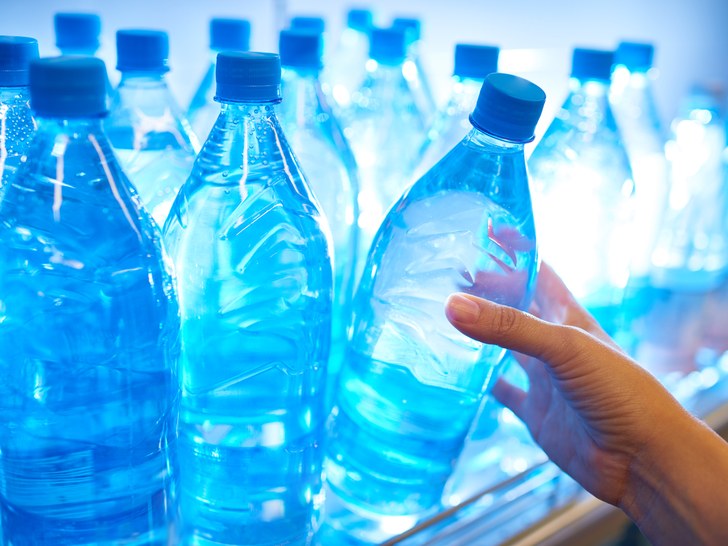
Natural mineral water is defined as water that is: obtained directly from underground sources protected from pollution risks characterised by its content of certain mineral salts and their relative proportions guarantees constancy of its composition and the stability of its flow collected under conditions which guarantee the original microbiological purity and chemical composition packaged close to the point of emergence of the source cannot be subjected to any treatment (except for limited ones such as carbonation, iron or manganese removal) may claim medicinal effects
Natural mineral water accounts for the majority of our bottled water sales in Europe, where consumers demand “pure”, “untouched” water.
Natural mineral water also constitutes a significant share of our local brands in emerging markets.
2 Types of water: Spring water, a water defined by origin
Water defined by origin is the leading product type for our United States local brands, as well as the majority of our local brands outside Europe.
3: Types of water : what is prepared water ?
Prepared waters may: originate from any type of water treatment supply (including municipal water) be subjected to any treatment that modifies the original water in order to comply with chemical, microbiological and radio logical safety requirements for pre-packaged water
Prepared water is the standard for emerging countries where purity of water means above all, safety. Depending on local legislation, the label would identify the water as “purified water” or “drinking water”.
The plant is an individual from the Partnership for Safe Water and meets or surpasses all water treatment quality models.
Water Sources
Water from the Bushy Park Reservoir and the Edisto River courses through profound passages to our Hanahan Water Treatment Plant. Peruse progressively about our source water here.
Fast Mixing
When it touches base at the plant, the pH is balanced and water purifying process is quickly blended with aluminum sulfate (alum), a coagulant that enables the polluting influences to stick together to frame greater particles called floc.
Flocculation
After quick blending, the how to purify waterstreams into flocculation bowls, where the stream of water is moderated and the floc has sufficient energy to become greater.
Sedimentation
Next, the water streams into sedimentation bowls, where the overwhelming floc particles sink to the base and are expelled.
Filtration
Presently the water treatment goes through substantial channels made of sand, rock, and anthracite. Filtration expels any staying minuscule particles and microorganisms.
Cleansing
At last, the water is cleaned to ensure it against microscopic organisms. Charleston Water Treatment Process System utilizes chlorine dioxide and a mix of chlorine and smelling salts called chloramines to sterilize the water. Fluoride is additionally included help great dental wellbeing.
Circulation
The perfect water is then siphoned into funnels that convey it to in excess of 110,000 homes and organizations in the Greater Charleston zone.

 Mast water technology mainly focuses on providing water softening solutions to the modern household. The water that comes from the sea and mostly all the urban sources is hard and needs to be softened. That is why the water softening equipment is seriously appreciated in the urban dwellings where hard water is a serious issue.




 Innovative Water