Based on science development and technology innovation and dedicated to the improvement of water environment, our company is a high-tech environmental protection engineering company specialized in the research and development of water treatment equipment and technology, engineering contracting and the installation as well as the commission of the mechanical and electrical equipment. Besides, our company is the earliest and biggest high-tech environmental protection chemical enterprise dedicated in comprehensively researching and developing the environmental-friendly water treatment agents in China. The company is mainly engaged in the installation, modification as well as improvement of EPC projects regarding to water treatment companies in pakistan in the fields of electric power, industry, chemical industry, food processing, urban life and so forth.
Research and development and introduction and application of foreign top technology
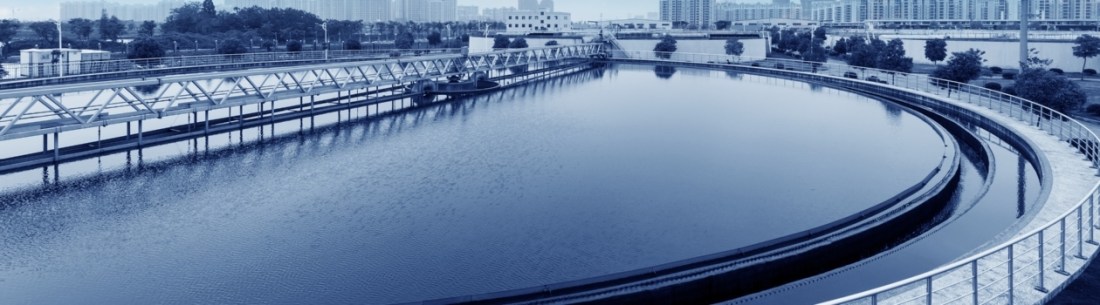
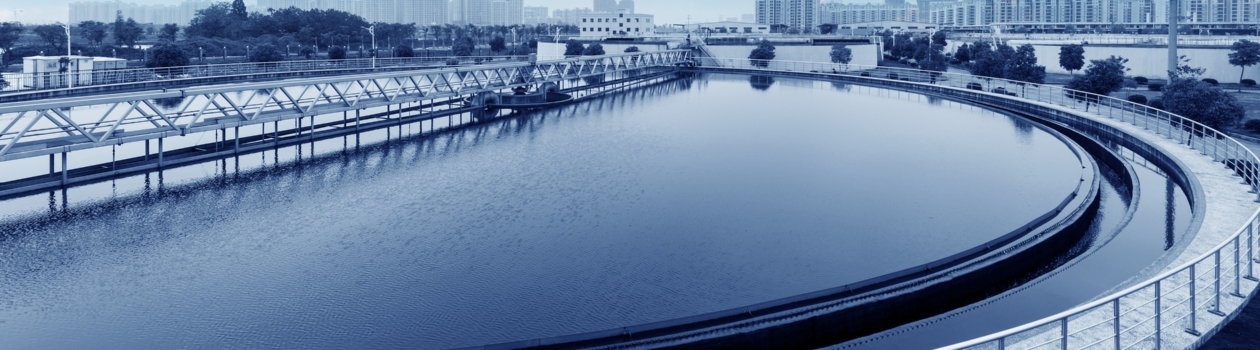
CENTRAL WASTEWATER TREATMENT The objective of waste water treatment is to reduce the concentrations of specific pollutants to the level at which the discharge of the effluent will not adversely affect the environment or pose a health threat. Moreover, reduction of these constituents need only be to some required level. Although water can technically be completely purified by distillation and deionization, this is unnecessary and may actually be detrimental to the receiving water. Fish and other organisms cannot survive in deionized or distilled water.
For any given wastewater in a specific location, the degree and type of treatment are variables that require engineering decisions. Often the degree of treatment depends on the assimilative capacity of the receiving water. DO sag curves can indicate how much BOD must be removed from wastewater so that the DO of the receiving water is not depressed too far. The amount of BOD that must be removed is an effluent standard (discussed more fully in Chapter 11) and dictates in large part the type of wastewater treatment required.
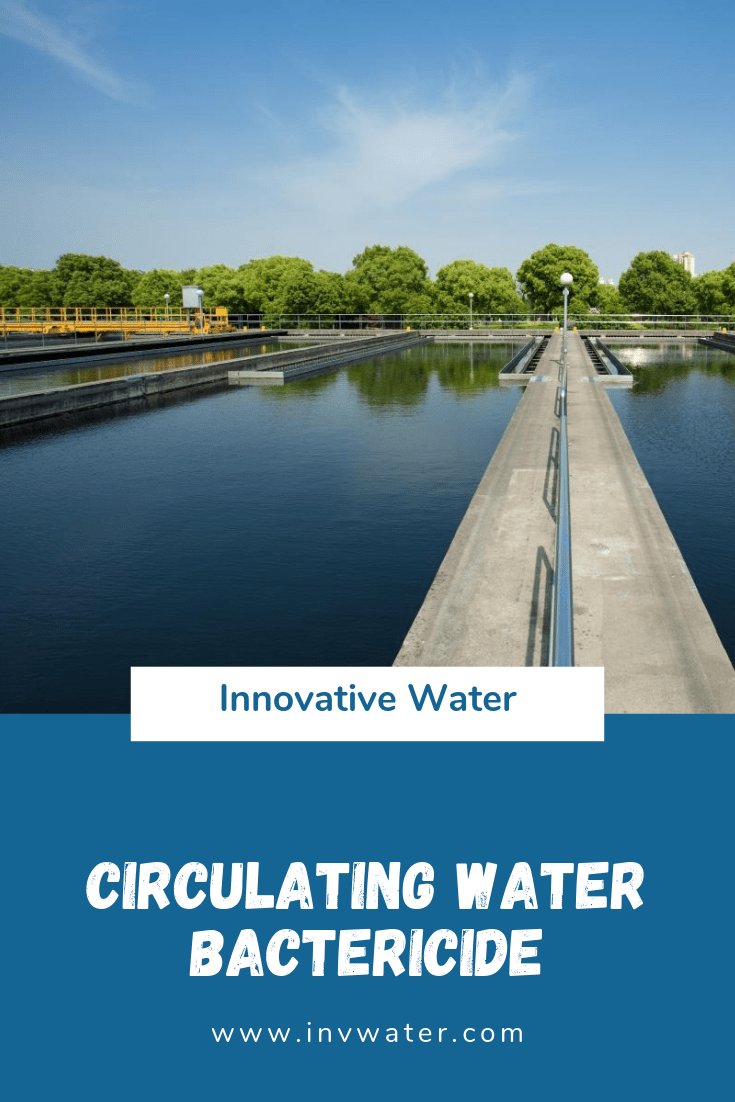
Microorganisms in circulating water of power plant bring great harm to cooling water system. It not only affects the effect of heat transfer, but also would lead to corrosion of heat exchanger, in seriously would result in shutdown. Now the plant uses the bactericide to treat with the microbial fouling generally, and a variety of fungicides have been developed. However, the long-term usage of fungicide will make the bacteria appear resistance, which greatly limits the application of such measures. This paper overviewed different resistance mechanisms of Pseudomonas, sulfate-reducing bacteria, iron bacteria and slime forming bacteria in the microbial fouling to bactericide and put forward some solutions.
Benzalkonium Chloride is one of the Quaternary ammonium class of Cationic surfactants, belonging to nonoxidizing biocide. It is widely used as a disinfectant in the Hospital, Livestock and Personal Hygiene sectors
Isothiazolinones is a kind of fungicidal with properties of broad spectrum, high efficiency, low toxicity and non-oxidative, it is the ideal biocidal in industrial circulating cool water system and in wastewater treatment in oilfield, papermaking, pesticide, cutting oil, leather, detergent and cosmetics etc..
SDIC is water soluble, it has properties of high effective, instant effective, wide range and safety. SDIC has strong fungicide effect, even at dosage of 20ppm, the fungicide ratio can reach to 99%.
TH-409 is composed of cationic surfactant, penetrating agent and dispersant. TH-409 has the advantages of high efficiency, wide range, sterilization, fungicidal, sludge stripping and cleaning
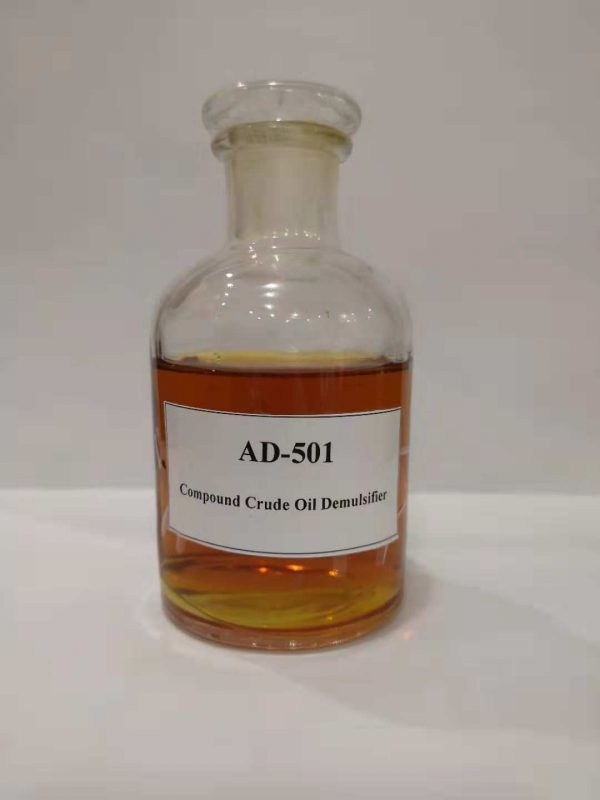
After the emulsion formed from crude oil containing water, its viscosity, density and freezing point increases, this makes the liquidity of crude oil worse, oil well production load rising and the energy consumption increasing, at the same time, the storage and transportation energy consumption also getting higher.
A summary treatment of crude oil follows. For full treatment, see petroleum, petroleum production, and petroleum refining.
Crude oil is a mixture of comparatively volatile liquid hydrocarbons (compounds composed mainly of hydrogen and carbon), though it also contains some nitrogen, sulfur, and oxygen. Those elements form a large variety of complex molecular structures, some of which cannot be readily identified. Regardless of variations, however, almost all crude oil ranges from 82 to 87 percent carbon by weight and 12 to 15 percent hydrogen by weight.
Crude oils are customarily characterized by the type of hydrocarbon compound oil that is most prevalent in them: paraffins, naphthenes, and aromatics. Paraffins are the most common hydrocarbons in crude oil; certain liquid paraffins are the major constituents of gasoline (petrol) and are therefore highly valued. Naphthenes are an important part of all liquid refinery products, but they also form some of the heavy asphaltlike residues of refinery processes. Aromatics generally constitute only a small percentage of most crudes. The most common aromatic in crude oil is benzene, a popular building block in the petrochemical industry. And Grill
An open recycling cooling framework utilizes a similar water over and over to cool procedure gear. Warmth ingested from the procedure must be disseminated to permit reuse of the water. Cooling towers, splash lakes, and evaporative condensers are utilized for this reason.
An open recycling cooling framework utilizes a similar water over and over to cool procedure gear. Warmth ingested from the procedure must be disseminated to permit reuse of the water. Cooling towers, splash lakes, and evaporative condensers are utilized for this reason.
Open recycling cooling frameworks spare a colossal measure of new water contrasted with the elective technique, once-through cooling. The amount of circulating water released to squander is enormously diminished in the open recycling technique, and substance treatment is increasingly practical. In any case, open recycling cooling frameworks are naturally subject to more treatment-related issues than once-through frameworks:
cooling by vanishing builds the broke down solids fixation in the water scale inhibitor , raising erosion and statement propensities
the moderately higher temperatures altogether increment erosion potential
the more drawn out maintenance time and hotter water scale in an open recycling framework increment the inclination for organic development
airborne gases, for example, sulfur dioxide, smelling salts or hydrogen sulfide can be assimilated from the air, causing higher consumption rates
microorganisms, supplements, and potential foulants can likewise be consumed into the water over the pinnacle
COOLING TOWERS
Cooling towers are the most well-known technique used to disseminate heat in open recycling cooling frameworks. They are intended to give close air/water contact. Warmth dismissal is basically by vanishing of part of the cooling water. Some reasonable warmth misfortune (direct cooling of the water by the air) likewise happens, yet it is just a minor segment of the all out warmth dismissal.
Sorts of Towers
Cooling towers are arranged by the sort of draft (regular or mechanical) and the course of wind stream (crossflow or counterflow). Mechanical draft towers are additionally subdivided into constrained or instigated draft towers.
Characteristic draft towers. Now and again called “hyperbolic” towers because of the unmistakable shape and capacity of their fireplaces, normal draft towers don’t require fans. They are intended to exploit the thickness contrast between the air entering the pinnacle and the hotter air inside the pinnacle. The warm, clammy air inside the pinnacle has a lower thickness, so it ascends as denser, cool air is attracted at the base of the pinnacle. The tall (up to 500 ft) fireplace is important to actuate sufficient wind stream. Common draft towers can be either counterflow or crossflow plans. The pinnacle imagined is a crossflow model. The fill is outside to the shell framing a ring around the base. In a counterflow model, the fill is inside the shell. In the two models, the vacant stack represents a large portion of the pinnacle tallness.
Mechanical Draft Towers. Mechanical draft towers use fans to move air through the pinnacle. In a constrained draft configuration, fans push air into the base of the pinnacle. Practically all constrained draft towers are counterflow plans. Actuated draft towers have a fan at the top to draw air through the pinnacle. These towers can utilize either crossflow or counterflow air flows and will in general be bigger than constrained draft towers.
Counterflow Towers. In counterflow towers, air moves upward, legitimately restricted to the descending progression of circulation water scale inhibitor . This plan gives great warmth trade in light of the fact that the coolest air contacts the coolest water. Headers and splash spouts are normally used to disperse the water in counterflow towers.
Crossflow Towers. In crossflow towers, wind currents evenly over the descending progression of water. The crossflow configuration gives a simpler way to the air, subsequently expanding the wind stream for a given fan torque. Crossflow towers ordinarily have a gravity feed framework a dissemination deck with uniformly separated metering openings to convey the water technology. Frequently, the deck is secured to hinder green growth development.
Cooling Tower Components
Fill Section. The fill segment is the most significant piece of the pinnacle. Pressing or fill of different kinds is utilized to keep the water appropriated equally and to expand the water surface zone for progressively productive dissipation. Initially, fill comprised of “sprinkle bars” made of redwood or weight treated fir. Sprinkle bars are currently accessible in plastic too. Different sorts of fill incorporate plastic sprinkle network, clay block, and film fill.
Film fill has turned out to be prominent as of late. It comprises of firmly pressed, folded, vertical sheets, which cause the water to stream down through the pinnacle in a dainty film. Film fill is normally made of plastic. Polyvinyl chloride (PVC) is usually utilized for frameworks with a greatest water temperature of 130°F or less. Chlorinated PVC (CPVC) can withstand temperatures to roughly 165°F.
Film fill gives more cooling limit in a given space than sprinkle fill. Sprinkle fill can be in part or completely supplanted with film completely fill of a current cooling tower. In view of the nearby dispersing, film fill is truly helpless to different kinds of affidavit. Calcium carbonate scaling and fouling with suspended solids has happened in certain frameworks. Procedure contaminants, for example, oil and oil, can be immediate foulants and additionally lead to substantial natural development on the fill. Any sort of affidavit can seriously decrease the cooling proficiency of the pinnacle.
Louvers. Louvers. Louvers are utilized to help direct wind current into the pinnacle and limit the measure of windage misfortune (water being sprinkled or smothered the sides of the pinnacle).
Float Eliminators. Float Eliminators. “Float” is a term used to depict beads of water entrained noticeable all around leaving the highest point of the pinnacle. Since float has a similar piece as the flowing water, it ought not be mistaken for vanishing. Float ought to be limited since it squanders water and can cause recoloring on structures and cars at some separation from the pinnacle. Float eliminators unexpectedly alter the course of wind current, giving diffusive power to isolate water from the air. Early float eliminators were made of redwood in a herringbone structure. Present day float eliminators are regularly made of plastic and come in a wide range of shapes. They are more viable in expelling float than the early wood forms, yet cause less weight drop.
Way to deal with Wet Bulb, Cooling Range
Cooling towers are intended to cool water to a specific temperature under a given arrangement of condi-tions. The “wet knob temperature” is the most reduced temperature to which water can be cooled by dissipation. It isn’t commonsense to plan a pinnacle to cool to the wet globule temperature. The contrast between the chilly sump temperature and the wet globule temperature is known as the “approach.” Towers are normally planned with a 7-15°F methodology. The temperature distinction between the hot return water and the chilly sump water is alluded to as the “cooling range” (DT ). Cooling range is generally around 10-25°F however can be as high as 40°F in certain frameworks.
Natural mineral water is defined as water that is: obtained directly from underground sources protected from pollution risks characterised by its content of certain mineral salts and their relative proportions guarantees constancy of its composition and the stability of its flow collected under conditions which guarantee the original microbiological purity and chemical composition packaged close to the point of emergence of the source cannot be subjected to any treatment (except for limited ones such as carbonation, iron or manganese removal) may claim medicinal effects
Natural mineral water accounts for the majority of our bottled water sales in Europe, where consumers demand “pure”, “untouched” water.
Natural mineral water also constitutes a significant share of our local brands in emerging markets.
2 Types of water: Spring water, a water defined by origin
Water defined by origin is the leading product type for our United States local brands, as well as the majority of our local brands outside Europe.
3: Types of water : what is prepared water ?
Prepared waters may: originate from any type of water treatment supply (including municipal water) be subjected to any treatment that modifies the original water in order to comply with chemical, microbiological and radio logical safety requirements for pre-packaged water
Prepared water is the standard for emerging countries where purity of water means above all, safety. Depending on local legislation, the label would identify the water as “purified water” or “drinking water”.
PAC is certainly not a solitary item, yet a whole range of flexible inorganic polymers. PAC’s are portrayed by two essential numbers: their quality (as a rule in % alumina, or Al2O3), and their basicity. Basicity gives a general thought of the sum or level of polynuclear material in the PAC. At the low end of the basicity scale is ACS, with 0% basicity (which implies it’s anything but a PAC). The least basicity business PAC’s are about 10%; most PAC’s are in the medium to high basicity extend (50-70%). At the highest point of the scale is aluminum chlorhydrate (ACH): at 83%, it is the most elevated stable basicity PAC Pakistan accessible. (ACH is just an exceptional types of PAC – progressively about ACH in the following area).
PAC’s can offer various favorable circumstances over customary coagulants, for example, alum or iron salts. Since Poly Aluminum Chloride are pre-killed and have a higher charge thickness than customary coagulants, they coagulate through a progressively proficient instrument, called charge balance. This enables PAC’s to be compelling at lower portions than alum or iron salts, when one thinks about the real metal being added by the coagulant to the framework. Coming about advantages can include:
Less pH misery and alkalinity consumption, diminishing lime or harsh prerequisites
Diminished concoction ooze volumes.
Slop thickness is expanded.
Improved outcomes in higher pH frameworks.
Better execution in virus water.
What’s more, since PAC does work so any other way, there are numerous applications where it will give completed water quality that the customary coagulants can’t accomplish.
GEO comprehends the connections between basicity, alumina content and the manner in which a PAC will perform. We additionally have the capacity to deliver Poly Aluminum over the whole range of basicity; our standard line incorporates low, medium, high and greatest basicity items. Consolidate our applications and assembling ability, and GEO can locate the ideal PAC item for you.
The plant is an individual from the Partnership for Safe Water and meets or surpasses all water treatment quality models.
Water Sources
Water from the Bushy Park Reservoir and the Edisto River courses through profound passages to our Hanahan Water Treatment Plant. Peruse progressively about our source water here.
Fast Mixing
When it touches base at the plant, the pH is balanced and water purifying process is quickly blended with aluminum sulfate (alum), a coagulant that enables the polluting influences to stick together to frame greater particles called floc.
Flocculation
After quick blending, the how to purify waterstreams into flocculation bowls, where the stream of water is moderated and the floc has sufficient energy to become greater.
Sedimentation
Next, the water streams into sedimentation bowls, where the overwhelming floc particles sink to the base and are expelled.
Filtration
Presently the water treatment goes through substantial channels made of sand, rock, and anthracite. Filtration expels any staying minuscule particles and microorganisms.
Cleansing
At last, the water is cleaned to ensure it against microscopic organisms. Charleston Water Treatment Process System utilizes chlorine dioxide and a mix of chlorine and smelling salts called chloramines to sterilize the water. Fluoride is additionally included help great dental wellbeing.
Circulation
The perfect water is then siphoned into funnels that convey it to in excess of 110,000 homes and organizations in the Greater Charleston zone.
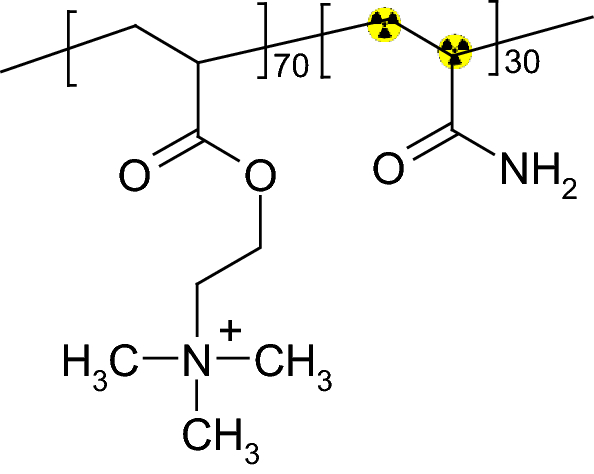
Cationic polyacrylamide copolymers (PAMs) are utilized for slime dewatering in city squander water treatment and might enter nature by spreading of the slop on horticultural land. Concern has been communicated since little is thought about the debasement of PAMs in soils. To get itemized data on the polymer’s destiny in the dirt compartment, the debasement of 14C-radiolabelled PAM in an outside lysimeter was considered.
Results
No plant take-up and draining of radioactivity was watched. There was for all intents and purposes no vertical development of polymer and no change items found toward the finish of the examination. For the main 10 cm soil layer, a mass parity was built up all through the examination. About 10% of connected radioactivity was not extractable from soil even with a framework ruinous technique, and this was finished up to be bound buildup. Portrayal of extractable radioactivity by methods for GPC-investigation demonstrated a critical abatement of the sub-atomic load of the PAM with time. The decline in atomic weight demonstrates a breakdown of the polymer spine (the C– C-chain), and is thought to be essential corruption. The all out radioactivity content in the 10 cm top soil layer was measured at regular intervals over a time of 3 years. The outcomes demonstrate a critical lessening of the complete radioactivity after some time and this is characterized as extreme debasement following the meaning of OECD and EPA. In view of the information, a half-life time of 2.0 × 10³ days and a rate consistent of 0.00035/day were determined. With a χ2 of 12.0 the consequences of the computation are accordingly substantial and dependable. The rate consistent demonstrates a mineralization of 22.5% inside a time of 2 years dependent on the absolute recuperated radioactivity. This half-life time is exclusively founded on mineralization and does not consider the corruption of the polymer spine, hydrolysis of the side chains, consolidation into the dirt lattice, and accordingly is a traditionalist methodology.
Ends
14C-PAM debases all around gradually in soil after land-spreading as a segment of sewage ooze. Indeed, even in an extremely traditionalist assessment which just thought about the loss of radioactivity, a half-life time of 5.4 years was resolved.
Cationic polyacrylamide copolymers (PAMs) are a gathering of water-dissolvable polymers with a wide scope of uses in industry, nourishment handling, agribusiness and waste administration. One of the real applications for PAM is slime dewatering in city squander water treatment plants (MWWTPs). Spreading of the slime on agrarian land is as of now a standout amongst the most essential reusing courses. In Germany, the most extreme application rate of sewage muck on rural land is 5 tons dry strong (TDS) per hectare as a normal more than 3 years [16]. Taking into account that the dewatered ooze contains around 5 kg/TDS critical measures of PAM end up on the dirt.
As a feature of an earthbound hazard evaluation, the destiny of PAMs, i.e., sorption, portability and abiotic and biotic change, should be tended to. PAMs are firmly bound to natural issue and mud particles, and are consequently, stable in soil and extremely hard to desorb. The adsorption procedure happens quickly and is for the most part irreversible, despite the fact that the level of cpam adsorption is impacted by PAM compliance, soil and mineral properties and soil arrangement qualities [1]. As a rule, expanding sub-atomic size and expanding fasten augmentation lead to expanded adsorption [2]. High sorption limit results in low portability [3, 4].
Sojka et al. [1] detailed that PAM corruption happens gradually in soils and by a few distinct components. These incorporate biotic and abiotic change, for example, substance, photochemical, and natural procedures just as mechanical procedures, for example, culturing scraped spot, solidifying and defrosting. Initially, abiotic forms break the polymer into dynamically shorter portions. At the point when polymer sections are decreased to 6 or 7 monomer units long, they are then used by soil microorganisms [1]. In general, debasement rates in soil are assessed to be around 10% every year. Unobtrusive corruption was likewise announced by Wolter et al. [5] and Stahl et al. [6]. Soil microcosm tests looking at biodegradation rates of cross-connected PAM copolymer showed corruption rates as high as 7% per 80 days. Chang et al. [7] inspected the oxygen consuming and anaerobic biodegradation of cationic-PAM and demonstrated the polymer was liable to fractional debasement under the two conditions in research center inoculation– brooding tests. Estimated O2 utilization under oxygen consuming conditions, and gas generation under anaerobic conditions showed that the incomplete obliteration of pendant cationic moieties happened by ester hydrolysis, however the polymer’s spine, which only displays carbon– carbon bonds, remained basically unblemished. Ester hydrolysis of the polymer side chain discharges choline and anionic-PAM. Different creators concentrated on the examination of the microbial procedures. For instance, Nakamiya and Kinoshita [8] segregated two bacterial strains from soil, Enterobacter agglomerans and Azomonas macrocytogenes, with the capacity to corrupt PAM. The two strains developed on a medium made out of 10 mg/mL PAM as the sole wellspring of C and N. After 27 h hatching, about 20% of the complete natural C in the underlying medium was devoured and the normal MW of PAM was diminished from 2 × 10⁶ to 0.5 × 10⁶ by microbial corruption. Growths likewise can break down PAM. Stahl et al. [6] explored the biodegradation of two superabsorbent polymers (in particular a crosslinked, insoluble polyacrylate and an insoluble polyacrylate/polyacrylamide copolymer) in soil by the white-decay growth Phanerochaete chrysosporium. The polymers were both solubilized and mineralized by the parasite yet solubilization and mineralization of the copolymer was considerably more fast than that of the polyacrylate. Soil microorganisms inadequately solubilized the polymers and were unfit to mineralize either unblemished polymer. In any case, soil organisms worked related to the parasite amid polymer debasement in soil, whereby the growth solubilised the polymers and the dirt microorganisms invigorated mineralization. Besides, soil microorganisms had the capacity to fundamentally mineralize the two polymers after solubilization by P. chrysosporium developed under conditions that created parasitic peroxidases or cellobiose dehydrogenase, or after solubilization by photochemically produced Fenton reagent. The outcomes proposed that biodegradation of these polymers in soil was ideal under conditions that augmented solubilization. Wolter et al. [5] evaluated the natural corruption of a 14C-marked acrylamide/acrylic corrosive copolymer in a rural soil by two white decay parasites (Pleurotus ostreatus and Dichomitus squalens), a darker spoil organism (Flammulina velutipes) and a saprophytic soil growth (Agaricus bitorquis) in soil microcosms. The most noteworthy mineralisation of the 14C-copolymer to 14CO2 was estimated following the vaccination of the dirt with P. ostreatus (8.8% of the underlying radioactivity inside 22 weeks).
Despite the fact that PAM has been accounted for to be non-poisonous to the natural framework and unassuming change in soil has been accounted for by a few creators there is still worry regarding the hazard to muck revised soils. In view of these worries and the preparatory standard, which is one of the fundamental principles of the German soil assurance act, the German Fertilizer Ordinance DüMV of fifth December 2012 [9] presented a trigger an incentive for debasement of engineered polymers of 20% in a 2-year time frame.
While deciding the debasement capability of PAMs in soils or ooze corrected soils exploratory provokes should be tended to. Among others, there are critical issues in separating PAMs from soil or muck frameworks for evaluation by traditional techniques because of the level of sorption of the Poly Acrylamide . In this way, the utilization of a radioactive polymer was the main choice to pursue the destiny of PAMs. We mirrored the land-spreading of slime utilizing 14C-PAM to flocculate muck, which was then connected to the lysimeter. The dewatered muck was connected to undisturbed soils in open air lysimeters pursued by agrarian treatment. Hence, degradability and filtering of PAM were learned at practical open air presentation conditions and focuses in the wake of applying 14C material utilizing exceptionally touchy 14C recognition systems.
Test substance union and portrayal
Union
360 MBq of the 14C-marked monomer Acrylamide [2,3-14C] (Lot No. 101022, explicit action 2.60 MBq/mg, compound purity > 99%) was obtained from ARC, and utilized for the polymerisation system. For amalgamation, 0.0225 g Versenex 80 (10%, Ashland), 1.88 g 14C-acrylamide (half in water), 3.15 g ADAME-QUAT ([2‐(acryloyloxy)ethyl]trimethyl-ammonium chloride, 80%, Ashland) were balanced with H2SO4 to pH 4. As Cationic Poly Acrylamide initiator, crisply arranged 0.055 g ABAH (2,2′-Azo-bis(2-amidinopropane) dihydrochloride, 10%, Ashland) was included, cooled to − 10 °C with dry ice/ethanol blend and presented to UV light for 1 h. The blend item was dried for 90 min at 90 °C and ground in a factory to < 1 mm.
Characterisation of 14C-polyacrylamide copolymer (PAM)
Thickness Viscosity was controlled by a Brookfield viscometer with UL-connector at a convergence of 0.5% 14C-PAM and brought about 760 cp at 1.0 rpm, and 670 cp at 2.5 rpm. Contrasted with the business item, which has a normal sub-atomic load somewhere in the range of 5 and 8 million Daltons, 14C-PAM was at the lower end of the detail, i.e., a sub-atomic mass of 6 million Daltons.
Monomer content The monomer content was 2820 ppm estimated by radio-HPLC which is in the scope of business PAM, where all educts are underneath 1000 ppm.
14C-Radioactivity In all out 3.6 g 14C-PAM with a complete radioactivity of 339.3 MBq was delivered. The particular radioactivity was 94.25 kBq/mg.
Synthetic structure of 14C-PAM The methods depicted above yielded the concoction substance as displayed in Fig. 1. It is impo
Invert Osmosis is an innovation that is utilized to evacuate a vast greater part of contaminants from water by pushing the Ammonia Water under strain through a semi-penetrable layer.
This article is pointed towards a group of people that has practically no involvement with Reverse Osmosis and will endeavor to clarify the nuts and bolts in straightforward terms that should leave the peruser with a superior in general comprehension of Reverse Osmosis innovation and its applications.
This article covers the accompanying subjects:
Understanding Osmosis and Reverse Osmosis
How does Reverse Osmosis (RO) work?
What contaminants does Reverse Osmosis (RO) expel?
Execution and plan estimations for Reverse Osmosis (RO) frameworks
Salt Rejection %
Salt Passage %
Recuperation %
Focus Factor
Motion Rate
Mass Balance
Understanding the contrast among passes and stages in a Reverse Osmosis (RO) framework
1 organize versus 2 arrange Reverse Osmosis (RO) framework
Exhibit
Switch Osmosis (RO) framework with a concentrate reuse
Single Pass versus Double Pass Reverse Osmosis (RO) frameworks
Pre-treatment for Reverse Osmosis (RO)
Fouling
Scaling
Compound Attack
Mechanical Damage
Pre-treatment Solutions for Reverse Osmosis (RO)
Multi Media Filtration
Microfiltration
Antiscalants and scale inhibitors
Relaxing by particle trade
Sodium Bisulfite (SBS) infusion
Granular Activated Carbon (GAC)
Invert Osmosis (RO) execution drifting and information standardization
Invert Osmosis (RO) film cleaning
Synopsis
Understanding Reverse Osmosis
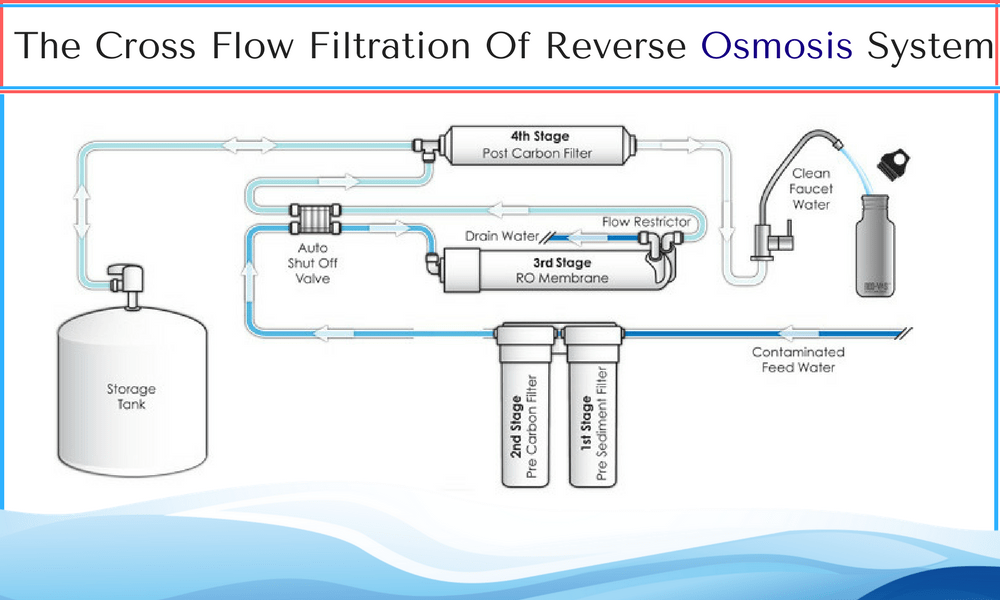
Turn around Osmosis, regularly alluded to as RO, is where you demineralize or deionize water by pushing it under strain through a semi-porous Reverse Osmosis Membrane.
Assimilation
To comprehend the reason and procedure of Reverse Osmosis you should initially comprehend the normally happening procedure of Osmosis.
Assimilation is a normally happening marvel and a standout amongst the most vital procedures in nature. It is where a more fragile saline arrangement will in general relocate to a solid saline arrangement. Instances of assimilation are when plant roots ingest water from the dirt and our kidneys retain water from our blood.
The following is a graph which demonstrates how assimilation functions. An answer that is less thought will have a characteristic propensity to relocate to an answer with a higher focus. For instance, on the off chance that you had a compartment loaded with water with a low salt focus and another holder brimming with water with a high salt fixation and they were isolated by a semi-penetrable layer, at that point the water with the lower salt fixation would start to move towards the water holder with the higher salt focus.
A semi-porous layer is a film that will enable a few iotas or particles to pass yet not others. A basic precedent is a screen entryway. It permits air particles to go through yet not bugs or anything bigger than the openings in the screen entryway. Another model is Gore-tex garments texture that contains an incredibly slight plastic film into which billions of little pores have been cut. The pores are sufficiently enormous to let water vapor through, yet little enough to keep fluid water from passing.
Switch Osmosis is the procedure of Osmosis in turn around. Though Osmosis happens normally without vitality required, to invert the procedure of assimilation you have to apply vitality to the more saline arrangement. An invert assimilation layer is a semi-penetrable film that permits the section of water particles however not most of broke up salts, organics, microscopic organisms and pyrogens. Notwithstanding, you have to ‘drive’ the water through the turn around assimilation layer by applying weight that is more prominent than the normally happening osmotic weight so as to desalinate (demineralize or deionize) water all the while, permitting unadulterated water through while keeping down a lion’s share of contaminants.
The following is a graph laying out the procedure of Reverse Osmosis. At the point when weight is connected to the concentrated arrangement, the water atoms are constrained through the semi-porous film and the contaminants are not permitted through.






 Innovative Water