What is an Oil Field

Fracking In California Under Spotlight As Some Local Municipalities Issue Bans

An oil field is a tract of land used for extracting petroleum, otherwise known as crude oil, from the ground. Although some contest the exact origin of oil, most consider petroleum a fossil fuel created from dead organic material often found in ancient seabeds thousands of meters below the surface of the earth.

BREAKING DOWN Oil Field
An oil field consists of a reservoir in the rocky strata of the Earth which traps hydrocarbons. An impermeable or sealing rock layer covers the reservoir. Typically, industry professionals use the term “oil field” with an implied assumption of economic size.

There are more than 65,000 oil fields around the world, many of the largest located in the Middle East. There have been tens of thousands of oil fields have been discovered. However, the concentration of 94-percent of known reserves is in fewer than 1500 major oil fields. The locations of oil fields have been the origin of past geopolitical conflicts and environmental concerns.

Complications of Establishing an Oil Field
Establishing an oil fields in Pakistan can be a herculean feat of logistics. It can include establishing the infrastructure necessary for what can be decades of extraction, production, and maintenance. Oil companies often contain entire divisions that are responsible for infrastructure construction and specialized services which are required to operate a profitable oil field. Oil fields are dotted with a variety of extraction equipment which includes drilling rigs, offshore platforms, pump jacks, and more. There may also be exploratory wells probing the edges, pipelines to transport the oil elsewhere, and support facilities.

In recent years, new technologies in oil exploration and production have dramatically increased the productivity levels of oil fields. These include horizontal drilling, hydraulic drilling, hydraulic fracturing, or fracking, and the use of proppant. Proppant is a mixture of water and sand used to keep the fractured pathways to the wellbore clear.

These technologies, coupled with advances such as seismic technology, helped to increase oil field efficiency rates and contributed to a glut in oil supply, which drove oil prices down. Companies that work oil fields remain focused on technological development to lower their production costs in the current price-pressured environment.

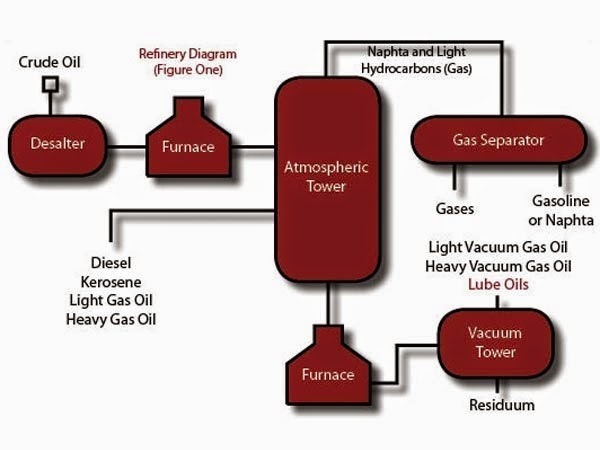
Crude Oil types Explained!

crude-oil

The crude oil is a great resource that is used all over the world every day. In this blog post, we will discuss the crude oil types that are used in the markets all over the world. These types have to be understood so that you can look up the various filtration modes that these crude oil products use. 

Following are the four types that we are discussing:

Light Distillates:

Light-Distillates.jpg

The light distillates are the OIL FIELD ASSISTANT that have high volatility, and that means they are easily combustible and will also evaporate if left in the open air. They are considered the highest quality of oils produced in the crude oil extraction process and are the lightest in chemical composition. The oils such as Kerosene, light and heavy Naphtha, Petroleum Spirit, Petroleum Naphtha, Gasoline, Jet Fuel, and Petroleum Ether are all forms of the light distillates.

Middle Distillates:

oil-refinning.jpg

The grade 1 and grade 2 fuel oils and diesel that is a part of the middle distillates category include the usual domestic fuels, light, crude marine gas oils, and similar diesel-based products. These oils are also considerably volatile but are less volatile than their lighter counterparts. They are also comparatively less evaporative and their fumes are toxic as well.

Medium Oils:

medium-level-oil.jpg

This is the most extensive category of crude oil with a lot of leftover forms of crude oil being used on more everyday purposes. These are less volatile oils with an increased toxicity level and all the usual oil spills in the oceans are mainly these forms of oils. 

Heavy Crude Oils:

Heavy-Crude-Oils.jpgHeavy crude oils are also known as heavy fuel oils and include grades 3, 4, 5 and 6 fuel OIL ADDITIVES also known as Bunker B & C. The intermediate heavy marine fuels are included in this list. There is minimal evaporation of these oils and they are highly toxic in nature. They have a strong tendency to be toxic for fish, fowl and fur-bearing creatures. They also cause long term contamination of water and soil that they come across. 

There are more than 160 different forms of crude oils but they are usually all falling in one of these categories. 

We would love to know what you find out on the purification of all of these crude oils.

What is Reverse Osmosis?

Invert Osmosis is an innovation that is utilized to evacuate a vast greater part of contaminants from water by pushing the Ammonia Water under strain through a semi-penetrable layer.

Reverse Osmosis Reducing agent

This article is pointed towards a group of people that has practically no involvement with Reverse Osmosis and will endeavor to clarify the nuts and bolts in straightforward terms that should leave the peruser with a superior in general comprehension of Reverse Osmosis innovation and its applications.

This article covers the accompanying subjects:

Understanding Osmosis and Reverse Osmosis

How does Reverse Osmosis (RO) work?

What contaminants does Reverse Osmosis (RO) expel?

Execution and plan estimations for Reverse Osmosis (RO) frameworks

Salt Rejection %

Salt Passage %

Recuperation %

Focus Factor

Motion Rate

Mass Balance

Understanding the contrast among passes and stages in a Reverse Osmosis (RO) framework

1 organize versus 2 arrange Reverse Osmosis (RO) framework

Exhibit

Switch Osmosis (RO) framework with a concentrate reuse

Single Pass versus Double Pass Reverse Osmosis (RO) frameworks

Pre-treatment for Reverse Osmosis (RO)

Fouling

Scaling

Compound Attack

Mechanical Damage

Pre-treatment Solutions for Reverse Osmosis (RO)

Multi Media Filtration

Microfiltration

Antiscalants and scale inhibitors

Relaxing by particle trade

Sodium Bisulfite (SBS) infusion

Granular Activated Carbon (GAC)

Invert Osmosis (RO) execution drifting and information standardization

Invert Osmosis (RO) film cleaning

Synopsis

Understanding Reverse Osmosis

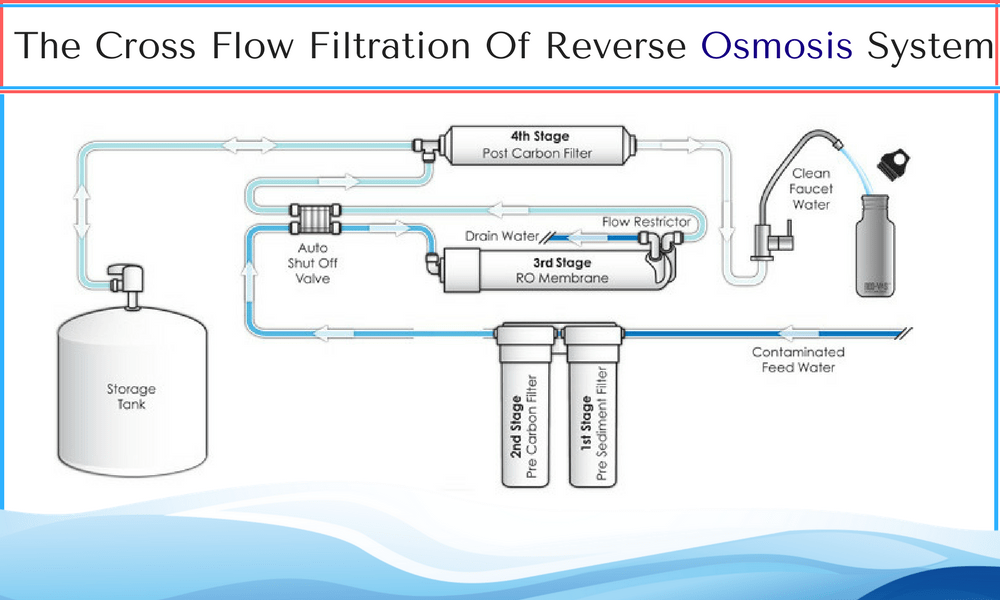
Turn around Osmosis, regularly alluded to as RO, is where you demineralize or deionize water by pushing it under strain through a semi-porous Reverse Osmosis Membrane.

Assimilation

To comprehend the reason and procedure of Reverse Osmosis you should initially comprehend the normally happening procedure of Osmosis.

Assimilation is a normally happening marvel and a standout amongst the most vital procedures in nature. It is where a more fragile saline arrangement will in general relocate to a solid saline arrangement. Instances of assimilation are when plant roots ingest water from the dirt and our kidneys retain water from our blood.

The following is a graph which demonstrates how assimilation functions. An answer that is less thought will have a characteristic propensity to relocate to an answer with a higher focus. For instance, on the off chance that you had a compartment loaded with water with a low salt focus and another holder brimming with water with a high salt fixation and they were isolated by a semi-penetrable layer, at that point the water with the lower salt fixation would start to move towards the water holder with the higher salt focus.

A semi-porous layer is a film that will enable a few iotas or particles to pass yet not others. A basic precedent is a screen entryway. It permits air particles to go through yet not bugs or anything bigger than the openings in the screen entryway. Another model is Gore-tex garments texture that contains an incredibly slight plastic film into which billions of little pores have been cut. The pores are sufficiently enormous to let water vapor through, yet little enough to keep fluid water from passing.

Switch Osmosis is the procedure of Osmosis in turn around. Though Osmosis happens normally without vitality required, to invert the procedure of assimilation you have to apply vitality to the more saline arrangement. An invert assimilation layer is a semi-penetrable film that permits the section of water particles however not most of broke up salts, organics, microscopic organisms and pyrogens. Notwithstanding, you have to ‘drive’ the water through the turn around assimilation layer by applying weight that is more prominent than the normally happening osmotic weight so as to desalinate (demineralize or deionize) water all the while, permitting unadulterated water through while keeping down a lion’s share of contaminants.

The following is a graph laying out the procedure of Reverse Osmosis. At the point when weight is connected to the concentrated arrangement, the water atoms are constrained through the semi-porous film and the contaminants are not permitted through.